Home › Services › Flow Elements › Venturi Nozzle
Venturi Nozzle Design
High Pressure Recovery · ASME PTC 6 · Steam & High Velocity Service
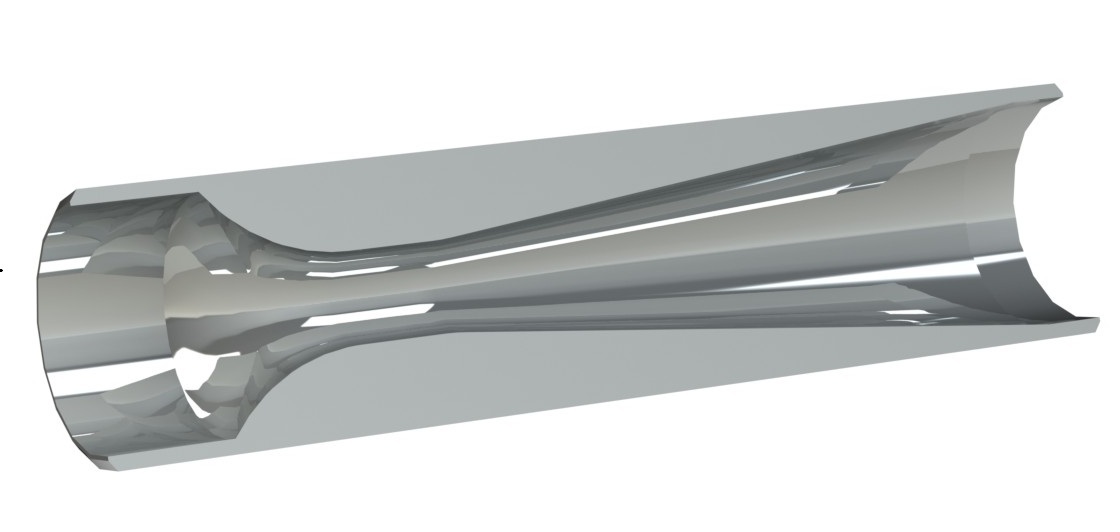
A venturi nozzle combines the smooth, elliptical convergent inlet and precision throat of a flow nozzle with a divergent outlet cone similar to a classical venturi tube. This hybrid geometry delivers the high accuracy and erosion resistance of a nozzle throat, while the diffuser section recovers a substantial portion of the pressure drop generated across the throat — giving a lower permanent pressure loss than a plain flow nozzle of the same beta ratio.
The design is most closely associated with ASME PTC 6, where it is used for high-precision steam turbine performance and acceptance testing, though it is also applied more broadly wherever high-velocity, high-temperature flow measurement with low pressure loss is required.
Design Basis
Precision-machined throat gives repeatable, low-uncertainty measurement suited to acceptance testing.
The divergent cone recovers pressure that a plain nozzle would otherwise lose downstream.
Smooth profile tolerates the high velocities typical of steam and superheated gas service.
Absence of sharp edges reduces wear compared with an orifice plate under similar conditions.
Our engineers will design a venturi nozzle tailored to your accuracy, pressure loss, and installation requirements.
Discuss Your Requirements