In the world of fluid measurement, accuracy is not a luxury — it is a necessity. The flow meter sits at the centre of every critical commercial, regulatory, and operational decision. Yet even the most advanced flow meter is only as trustworthy as the system used to calibrate it. This is where the flow calibration rig plays an indispensable role — and where the expertise brought to its design determines everything.
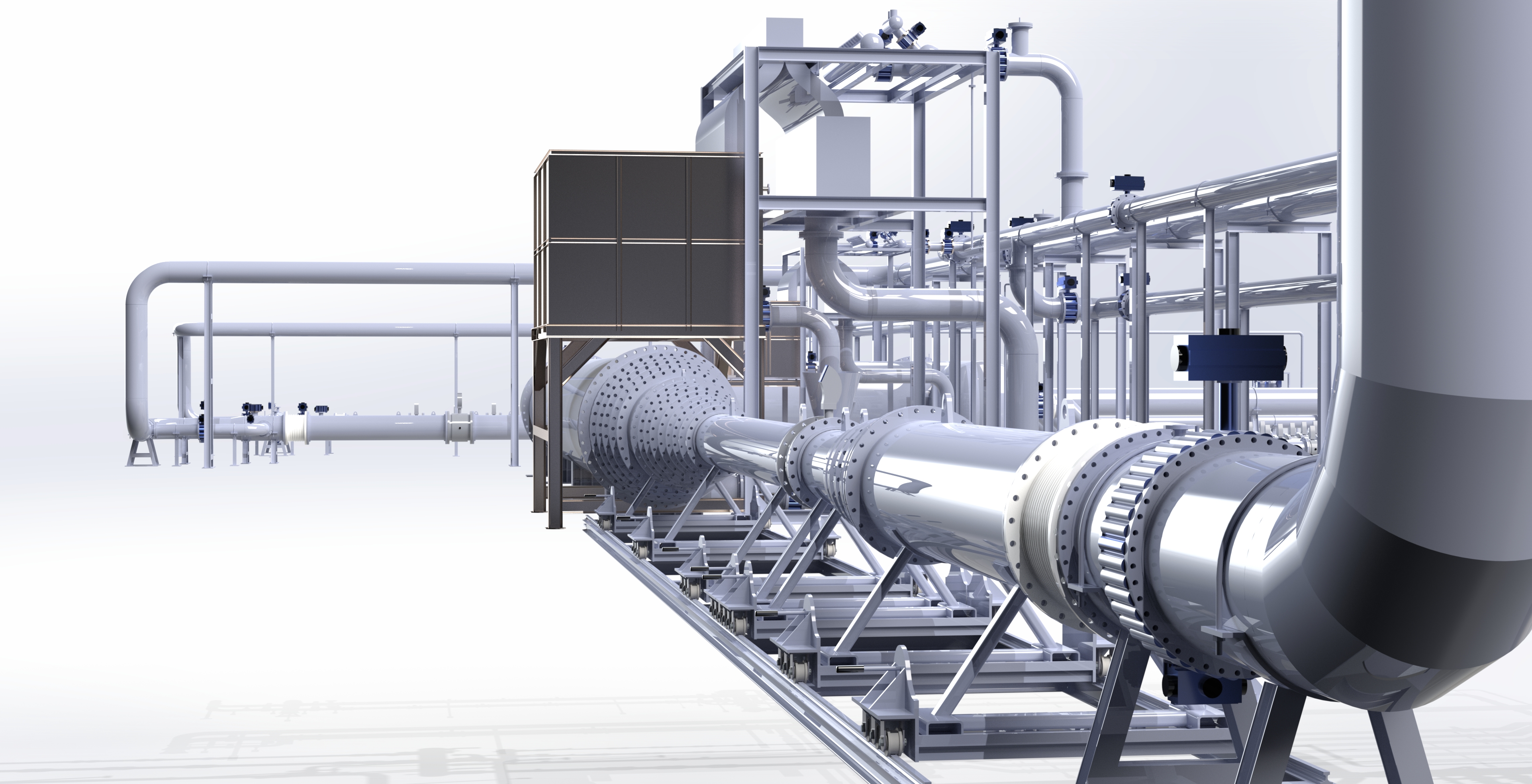
A flow calibration laboratory — also referred to as a flow calibration rig or test bench — is a dedicated facility that generates known, stable, and repeatable flow conditions and compares the reading of a device under calibration (DUC) against a primary or secondary reference standard. The rig controls variables such as flow rate, temperature, pressure, and fluid properties to ensure that the measurement environment is as close to ideal as possible.
Flow calibration laboratories serve a wide range of instruments: differential pressure flow elements (orifice plates, venturi tubes, pitot tubes, flow nozzles), velocity meters (turbine, magnetic, ultrasonic, swirl, fluidic), and mass flow devices such as Coriolis meters. Each technology type brings distinct calibration challenges that must be addressed at the rig design stage.
There are two principal methodologies used in flow calibration rigs. The correct choice depends on required measurement uncertainty, fluid type, flow range, and the applicable standards for each meter technology.
The fluid discharged by the meter is weighed on precision scales over a precisely measured time period. This is the most accurate primary reference method and is the foundation of liquid flow laboratories worldwide. It underpins all traceable claims in high-accuracy liquid calibration facilities.
The device under calibration is placed in series with a reference standard meter. Both measure the same flow simultaneously, and deviations are recorded. Widely used for production-line testing, on-site calibration, and field-standard transfer — provided the reference meter's uncertainty is well characterised.
Each method is governed by applicable international standards. Laboratories must implement and reference the latest versions of relevant documents and demonstrate that their procedures are consistent with those standards.
ISO/IEC 17025 sets the internationally recognised requirements for the competence of testing and calibration laboratories. For a flow calibration facility, these translate into specific obligations that go far beyond simply owning the right equipment.
Traceability is the unbroken chain linking every measurement result back to a national or international standard. Without it, a flow meter's reading cannot be compared, disputed, or relied upon in legal, commercial, or regulatory contexts. For laboratories seeking accreditation, demonstrating traceability through calibrated reference standards — with documented calibration certificates from accredited sources — is a fundamental requirement. The test uncertainty ratio (TUR) between the reference standard and the device under calibration should be at minimum 3:1, with 4:1 or better preferred for defensible results.
ISO/IEC 17025 requires that environmental conditions be controlled, monitored at appropriate intervals, and recorded in every calibration certificate. For flow calibration, this is particularly critical: fluid temperature stability, ambient pressure, and humidity all directly affect fluid density and viscosity — and therefore flow measurement results. Calibration must be suspended when conditions fall outside the laboratory's specified limits.
Every calibration activity must follow a written, validated procedure aligned with applicable international standards. This includes the method of applying the calibration, the sequence of measurements, the number of repeat runs, and the criteria for acceptance. Procedures must be reviewed and authorised before use.
A complete, documented uncertainty budget is mandatory under ISO/IEC 17025. For flow calibration, this budget must identify and quantify all significant contributors: repeatability of the device under calibration, reference standard uncertainty, timing errors, diverter errors (for dynamic start-stop gravimetric systems), fluid density measurement, temperature correction uncertainty, and resolution of the device under test. Expanded uncertainty must be reported at a defined coverage factor and confidence level.
Staff must be technically trained, assessed for competence, and formally authorised to conduct, review, and sign off calibration results. For on-site or mobile calibration activities, a qualified person must always be available to review and authorise results — even when working away from the permanent laboratory.
Every calibration report issued by an accredited laboratory must include the expanded uncertainty, coverage factor, confidence level, and the environmental conditions recorded during calibration. Results must be unambiguous and presented in a manner that cannot be misinterpreted by the end user.
The ambient environment directly affects measurement accuracy in flow calibration. The following parameters must be actively managed, documented, and reported in every calibration certificate:
| Parameter | Recommended Limit | Why It Matters |
|---|---|---|
| Acoustic noise level | Less than 60 dBA | Excessive noise can interfere with sensitive sensors and reduce personnel accuracy during readings |
| Illumination | 250–500 lux at working surface | Ensures accurate reading of instruments, graduated scales, and displays |
| Voltage regulation | ±2% or better | Protects electronic instruments from power fluctuation and ensures stable signal output |
| Frequency variation | ±1 Hz or better | Critical for time-based measurements — frequency drift introduces timing uncertainty |
| Fluid temperature stability | Variation ≤ ±1 °C/hour | Density changes affect volumetric calibration results if uncorrected; results must be compensated if this limit is exceeded |
| Fluid-to-air temperature difference | ≤ 10 °C | Prevents condensation on pipework and eliminates thermal gradient errors in the fluid column |
Operational requirement: Environmental monitoring must be continuous during calibration. Calibrations must be suspended when conditions drift outside specified limits. All environmental readings must appear in the calibration certificate — this is not optional under ISO/IEC 17025.
Not all calibration rigs are created equal. The quality of a rig is determined by the engineering rigour applied at every stage of its design — from hydraulics to instrumentation to spatial layout.
In all cases, the flow conditions at the test section must be steady, the velocity distribution across the test cross-section must be symmetrical, and the flow must be free from swirl. This is achieved through properly selected flow conditioners and strict adherence to upstream and downstream straight-pipe length requirements for each device under calibration, as specified in the applicable standard for that meter type.
The working fluid must be clean, uniform in composition, and at a thermally stable temperature. The degree of cleanliness required will be determined by the type of flow meters being calibrated. Sump tanks and constant-level overhead tanks must be cleaned at appropriate intervals. For liquid calibrations, density must be measured at the calibration temperature and recorded. If the liquid is sufficiently pure, density may be derived from published property tables at the measured temperature.
The flow control valve placement — upstream or downstream — must be selected to avoid any influence on the meter under calibration. The system must maintain adequate back-pressure at all operating points to prevent dissolved gas from coming out of solution and causing cavitation at the flow meter. The entire circuit must run full under all conditions, with no stagnant pockets that could trap gas or contaminants and introduce bias errors.
Critical Design Factors
Reference Standard Options
A defensible uncertainty budget for a flow calibration laboratory must account for: repeatability of the device under calibration (Type A), weighing or volumetric system uncertainty, timer accuracy (especially critical for dynamic gravimetric systems), diverter error, density measurement uncertainty, signal conditioning or transmitter uncertainty, and temperature correction contributions. For gas flow calibrations, pressure measurement uncertainty and compressibility corrections become additional significant contributors. For on-site calibration using portable ultrasonic reference meters, uncertainty will typically not be better than ±1% — a practical limit that must be reflected in the laboratory's claimed capability.
Flow calibration rigs serve a remarkably broad range of industries, each with distinct accuracy, fluid type, and regulatory requirements.
Fiscal metering for custody transfer of crude oil, refined products, and natural gas demands the highest traceability levels.
Bulk and domestic water meter calibration underpins accurate billing, leak detection, and distribution network management.
Precise dosing, batch consistency, and regulatory compliance require flow meters calibrated to strict tolerances.
Ingredient ratios, pasteurisation flows, and clean-in-place systems all rely on accurate, traceable flow measurement.
Cooling water, steam condensate, and fuel measurement in power plants require reliable, accredited calibration.
Universities and R&D institutions require calibration rigs for experimental fluid mechanics and flow measurement science.
Fuel consumption measurement and hydraulic system testing require traceable calibration facilities.
In-house calibration rigs enable rapid product development, production QC, and final acceptance testing without dependence on external facilities.
District metering, smart water networks, and district cooling systems depend on calibrated meters for accurate resource management.
Designing and commissioning a flow calibration rig is a multidisciplinary challenge spanning fluid dynamics, precision metrology, mechanical engineering, instrumentation, and quality systems management. It is not a task that can be reliably accomplished without specialist expertise — and the consequences of getting it wrong are severe: failed accreditation assessments, unresolvable uncertainty budgets, and costly physical rework after construction.
The cost of getting it wrong: A poorly designed flow rig may function physically but fail to deliver the claimed uncertainty in practice. Reworking pipework, replacing pumps, relocating reference standards, or re-qualifying the entire rig after construction is far more expensive — in time, money, and reputation — than investing in expert consultancy at the design stage. Accreditation assessors scrutinise rig design, uncertainty budgets, and operating procedures in detail.
Expert engineering consultancy in flow calibration rig design covers the full project lifecycle — from initial feasibility and requirements assessment, through hydraulic and instrumentation design, to commissioning support and performance validation. The following represent the core areas where specialist input delivers measurable value:
Correct diameter ratios, straight-run calculations, and location of the measurement cross-section relative to bends, valves, and fittings — all computed from the applicable standards for the intended scope of calibration. Poor pipe layout is the most common and most expensive design error in flow rigs.
Matching reference standards to your target calibration and measurement capability (CMC), ensuring TUR ≥ 3:1 (preferably 4:1) across the intended flow range, and guiding procurement of standards with calibration certificates from accredited sources. An inappropriate reference standard is the most common reason a laboratory cannot achieve its claimed uncertainty.
Selection and positioning of flow conditioners, settling chambers, and honeycomb straighteners to achieve the symmetrical velocity profiles demanded by the applicable standard — especially critical for gas flow rigs, large-bore liquid facilities, and any rig with constrained upstream straight lengths.
Hydraulic analysis to ensure adequate back-pressure at all operating points, preventing dissolved gas release and cavitation at the flow meter — a common and costly failure mode in improperly designed rigs, particularly at high flow rates and elevated temperatures.
Building a complete, defensible uncertainty model that satisfies accreditation assessors — identifying all influence quantities, assigning appropriate probability distributions, propagating contributions correctly, and demonstrating that your CMC claim is achievable with the rig as built and operated.
Drafting calibration procedures, equipment maintenance schedules, environmental monitoring protocols, reference standard management procedures, and quality system documents aligned with ISO/IEC 17025 clause structure — reviewed and ready for accreditation assessment.
A thorough internal audit of facility, records, uncertainty claims, and personnel competence before the formal accreditation assessment — identifying gaps and corrective actions before they become non-conformances that delay accreditation.
The flow meter is often described as the cash register of industry. But a cash register is only useful if it is accurate — and accuracy in flow measurement does not happen by accident. It is the result of deliberate, rigorous, and expert-led calibration rig design.
For manufacturers, utilities, and industrial operators who take measurement seriously, the question is not whether to invest in a quality calibration rig — it is how to design one that delivers the accuracy, repeatability, and long-term value the application demands. Engaging experienced specialist consultants is the most effective first step toward that goal.
Our experienced engineers will assess your requirements and deliver a calibration rig design that meets your accuracy, traceability, and accreditation goals — from feasibility through commissioning.
Discuss Your Calibration Rig Project