
Home › Services › FEA / CFD
FEA & CFD Analysis Services
Finite Element Analysis · Computational Fluid Dynamics · Fluid-Structure Interaction
We provide comprehensive Finite Element Analysis (FEA) services to help clients tackle complex mechanical engineering and thermal analysis challenges, delivering optimised and efficient engineering solutions. Our expertise spans thermal analysis, fatigue analysis, stress analysis, vibration analysis, and pressure analysis on fluid-carrying structures.
In addition to FEA, we offer Computational Fluid Dynamics (CFD) services — a powerful numerical simulation technique used to analyse and solve problems involving fluid flow. CFD enables accurate prediction of flow behaviour, pressure distribution, heat transfer, and turbulence, providing valuable insights for system optimisation.
Our FEA and CFD services are applicable across industries such as automotive, aerospace, energy, and manufacturing. By integrating these advanced techniques into the design and development process, we help clients reduce costs, improve performance, and minimise time to market.
Analysis Capabilities
Identify stress concentrations in structures under operating loads.
Evaluate temperature distribution and heat transfer in components.
Determine natural frequencies and avoid resonance-induced failures.
Simulate fluid flow, pressure drop, and turbulence in pipelines.

FEA is a critical tool for evaluating the structural and thermal performance of helical thermowells — specialised components used to protect temperature sensors in industrial processes. The unique helical design enhances strength and reduces the risk of resonance-induced failures in high-flow environments, making them ideal for oil and gas, chemical processing, and power generation.
FEA on helical thermowells involves simulating operating conditions including fluid-induced forces, pressure, temperature variations, and vibration. Key parameters analysed include stress distribution, natural frequencies, deformation, and vortex shedding profile — all evaluated for compliance with ASME PTC 19.3 TW.
The analysis begins with a detailed 3D model incorporating accurate material properties and boundary conditions. Fluid-structure interaction (FSI) simulations evaluate the effects of dynamic fluid forces, enabling early identification of stress concentrations, excessive vibration, or thermal deformation before manufacturing.
Thermowell Analysis Scope
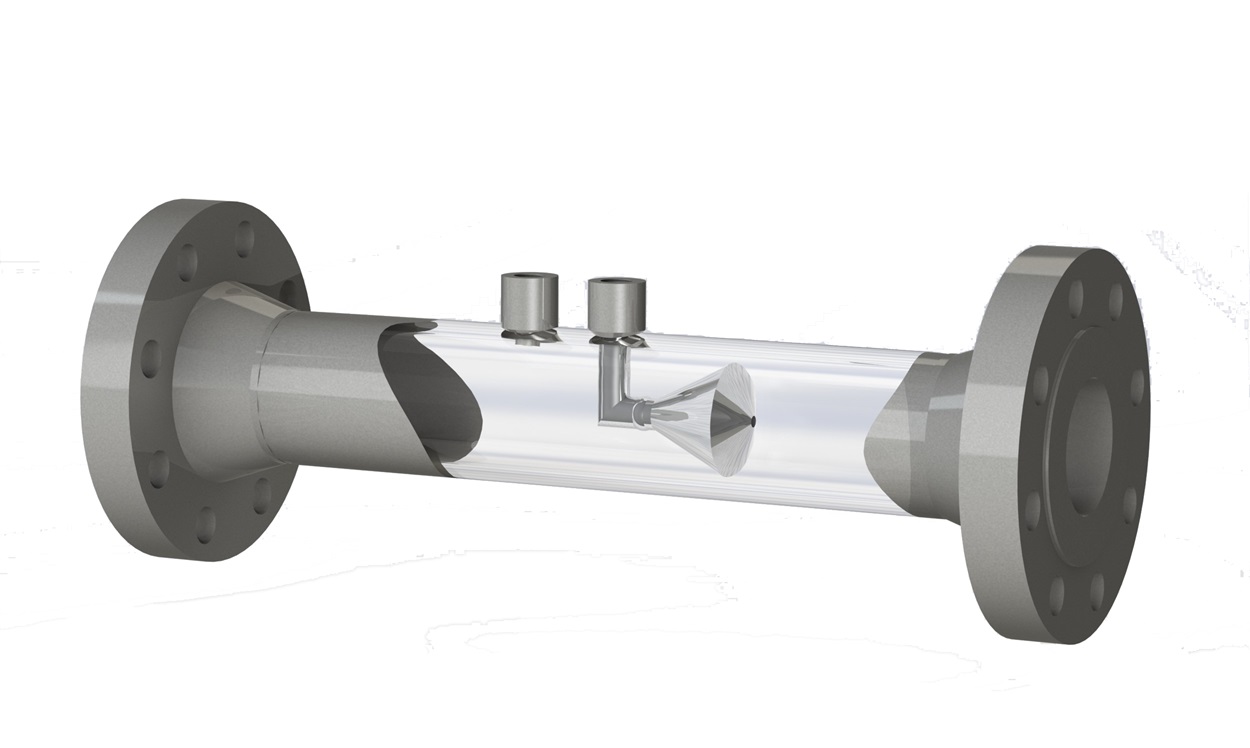
Cone flow meters are extensively utilised across industries for pipeline flow measurement due to their robust design, high accuracy, and suitability for compact installations. FEA and CFD are crucial tools during design and validation to ensure mechanical integrity and measurement reliability.
Fluid-structure interaction (FSI) simulations analyse pressure distribution on the cone structure, identifying areas of stress concentration and enabling design optimisation to prevent structural weaknesses. Modal analysis determines natural frequencies to assess the potential for vibration-induced failures (VIV).
Harmonic response analysis evaluates the amplitude of structural vibrations and associated stresses to predict cone behaviour under varying fluid flow conditions. These analyses lead to enhanced flow measurement accuracy, reduced energy losses, and prolonged service life.
Cone Meter Analysis Scope
Our engineers deliver precise simulation results that reduce design risk, ensure standards compliance, and optimise performance before manufacturing.
Request an Analysis Consultation