Home › Insights › Flow Calibration Rig Design
The Importance of Accurate Flow Calibration Rigs
Why precision-engineered calibration infrastructure is the backbone of reliable flow measurement
In the world of fluid measurement, accuracy is not a luxury — it is a necessity. The flow meter sits at the centre of every critical commercial, regulatory, and operational decision. Yet even the most advanced flow meter is only as trustworthy as the system used to calibrate it. This is where the flow calibration rig plays an indispensable role.
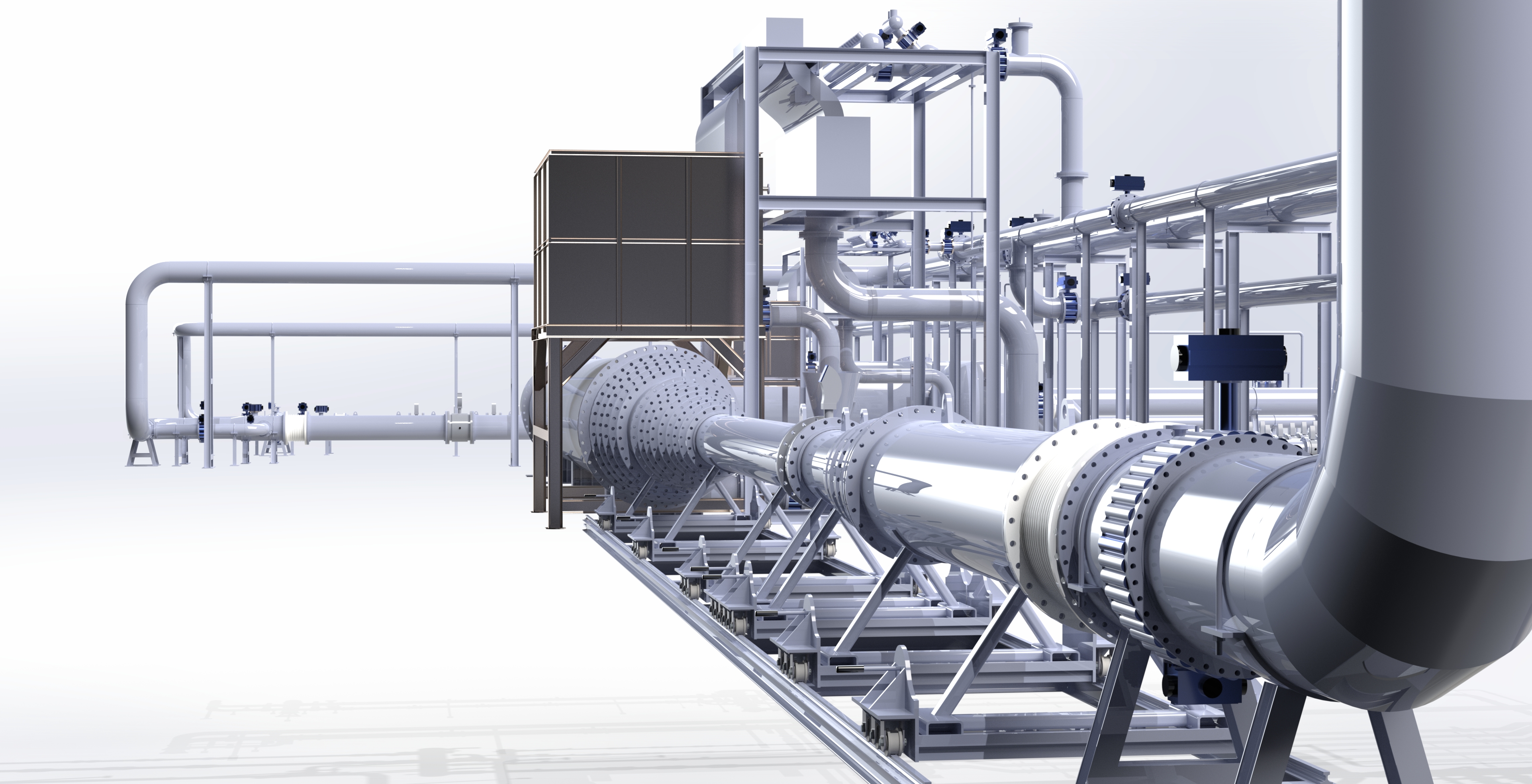
A flow calibration rig — also referred to as a flow calibration laboratory or test bench — is a dedicated system that generates known, stable, and repeatable flow conditions and compares the reading of a device under test (DUT) against a primary or secondary reference standard. The rig controls variables such as flow rate, temperature, pressure, and fluid properties to ensure that the measurement environment is as close to ideal as possible.
There are two principal methodologies used in flow calibration rigs. The right choice depends on the required measurement uncertainty, fluid type, flow range, and applicable standards.
The fluid discharged by the meter is weighed on precision scales over a measured time period. This is the most accurate primary reference method and is used in high-precision national metrology laboratories and leading commercial calibration facilities.
The device under test is placed in series with a reference standard meter. Both measure the same flow, and deviations are recorded. This method is widely used for production-line testing and field-standard calibration.
Each method is governed by applicable standards including ISO 4185, ISO 4064, OIML R49, and ISO/IEC 17025.
Traceability is the unbroken chain linking a measurement result back to a national or international standard. Without it, a flow meter's reading cannot be compared, disputed, or relied upon in a legal or contractual context. Regulatory frameworks such as the Legal Metrology Act in India or the Measuring Instruments Directive in Europe legally require traceable calibration for meters used in trade and custody transfer.
Uncertainty sources in a flow calibration rig include temperature drift in the fluid, pulsation and turbulence in the pipework, timing errors in the gravimetric system, resolution limits of the reference standard, and mechanical instability of the rig itself. A well-designed rig addresses each through careful hydraulic design, vibration isolation, temperature compensation, and advanced uncertainty budgeting — making results reproducible and defensible in custody transfer, regulatory audit, and product certification.
In commercial metering applications, measurement error translates directly into financial loss. A water utility operating with meters biased by even 1% may be under-billing millions of cubic metres per year. The cost of a professionally designed calibration facility, amortised over its service life, is almost always insignificant compared to the cumulative financial exposure of inaccurate measurement.
For manufacturers of flow meters, an in-house calibration rig is a critical tool for product development, quality control, and final acceptance testing. An in-house facility allows rapid iteration during development, tighter production tolerances, and greater confidence in the product that reaches the customer — without dependence on slower and more expensive third-party testing.
Operating a calibration laboratory to ISO/IEC 17025 — and achieving NABL accreditation in India — requires demonstrating technical competence through rigorous assessment of equipment, personnel, methodology, and quality management. This accreditation carries a level of credibility accepted by regulators, customers, and international trading partners. It requires that the calibration rig itself is designed and operated to the appropriate standard.
Not all calibration rigs are created equal. The quality of a rig is determined by the engineering rigour applied at every stage of design.
Critical Design Factors
Applicable Standards
Flow calibration rigs serve a remarkably broad range of industries, each with distinct accuracy, fluid, and regulatory requirements.
Fiscal metering for custody transfer of crude oil, refined products, and natural gas demands the highest traceability levels.
Bulk and domestic water meter calibration underpins accurate billing, leak detection, and network management.
Precise dosing and batch consistency require flow meters calibrated to strict tolerances.
Ingredient ratios, pasteurisation flows, and CIP systems all rely on accurate flow measurement.
Cooling water, steam condensate, and fuel measurement in power plants require reliable, calibrated meters.
Universities and research institutions require calibration rigs for experimental work in fluid mechanics and flow measurement science.
Fuel consumption measurement and hydraulic system testing require traceable calibration facilities.
Designing and commissioning a flow calibration rig is a multidisciplinary challenge that spans fluid dynamics, precision metrology, mechanical engineering, instrumentation, and quality systems. It is not a task that can be reliably accomplished without specialist expertise.
Expert engineering consultancy in this domain covers the full project lifecycle — from initial feasibility and requirements assessment, through hydraulic and instrumentation design, to commissioning support and performance validation. Consultants with deep experience in flow measurement and calibration technology help clients avoid costly design errors, select appropriate standards and methods, optimise for measurement uncertainty, and navigate the accreditation process efficiently.
The flow meter is often described as the cash register of industry. But a cash register is only useful if it is accurate — and accuracy in flow measurement does not happen by accident. It is the result of deliberate, rigorous, and expert-led calibration rig design.
For manufacturers, utilities, and industrial operators who take measurement seriously, the question is not whether to invest in a quality calibration rig — it is how to design one that delivers the accuracy, repeatability, and long-term value the application demands. Engaging experienced, specialist consultants is the most effective first step toward that goal.
Our experienced engineers will assess your requirements and deliver a calibration rig design that meets your accuracy, traceability, and accreditation goals — from feasibility through commissioning.
Discuss Your Calibration Rig Project